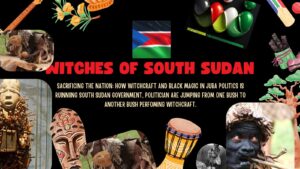
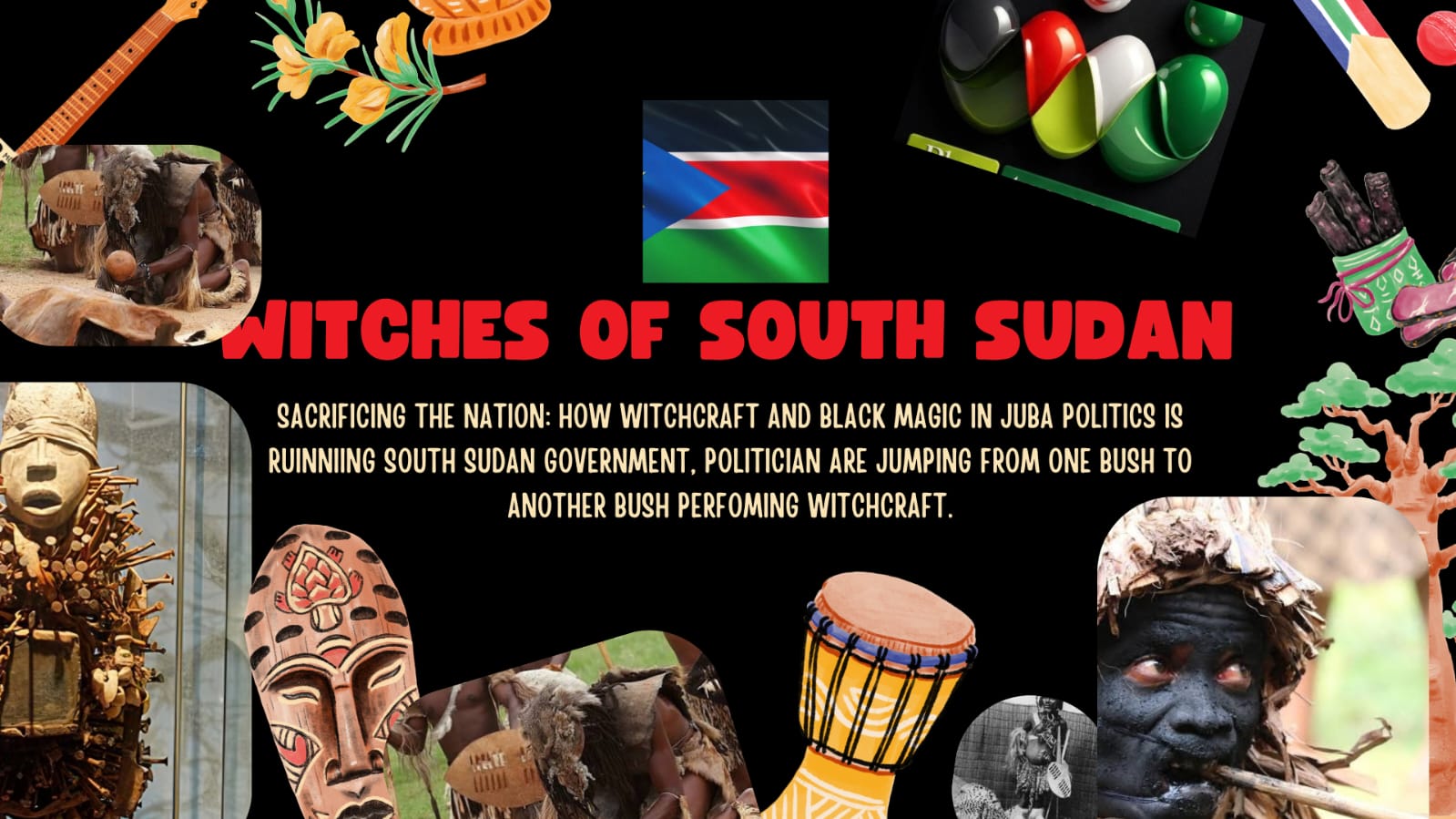
The Shadow Palace: How Political Witchcraft Is Paralyzing South Sudan’s Government
Walk the corridors of power in Juba and you’ll notice something nobody says out loud. A lot of what happens there doesn’t run on policy or persuasion. It runs on ritual. Across South Sudan, a striking number of senior officials chase appointments, favors, and executive decrees not by proving they can do the job, but by hiring spiritual muscle to bend the outcome their way.
This used to be a private thing, a quiet local belief. It isn’t anymore. It’s become a cross-border business, with power-seekers as the customers.
Where the “witchcraft bush” leads
When a minister is worried about a looming reshuffle, or wants to knock out a rival, the old tools of politics get set aside. Instead there are pilgrimages. A web of contacts links South Sudanese elites to spiritual practitioners scattered across the continent, and they travel to reach them:
- West Africa: Nigeria, Benin, Chad
- East Africa: Tanzania, and coastal Kenya, especially Mombasa
- Central Africa: the Democratic Republic of Congo
When a trip abroad isn’t practical, the practitioner comes to them. Foreign “spiritual doctors” get flown into Juba on public money, put up in the best hotels, and shown straight into executive offices.
Behind those closed doors, officials buy talismans, commission rituals, and collect prophecies. The goal is always the same: look untouchable, control your superiors, and take your enemies apart.
Fear as a weapon
None of this is about personal protection. It’s offensive, and it’s meant to hurt.
Rituals get commissioned to curse rivals, scramble their judgment, or destroy their names. That’s the point of it, to weaponize fear. And the fear works upward too. Surround a decision-maker with amulets, spiritual advisers, and dark warnings, and you can freeze him in place. When the president or his inner circle start weighing a curse before a security appointment or an economic reform, the country stops being governed by strategy. It gets governed by dread.
There’s a bitter irony here. The men and women who fought and bled in the Anyanya struggles earned their standing. This generation trades that inheritance for a shopping trip to the witchcraft bush.
Why the public gets abandoned
Here’s the part that actually wrecks the country.
When a man believes his job came from an expensive ritual, he doesn’t think he owes anyone anything. Not the voters, not the civil service. He didn’t win the seat; in his mind he bought it, from forces nobody can see. So criticism bounces off him. He’s convinced he’s beyond it.
And because he feels no debt to ordinary citizens, the work of governing just stops. Roads, clinics, security, the economy, all of it slides while he pours his time and money into keeping his chair through one more round of rituals.
You cannot build honest courts, working institutions, or anything resembling democracy on top of secret magical deals. That’s the deeper rot. The people at the top have drifted so far from daily life in South Sudan that the two barely touch anymore.
As long as the real decisions are made in dark rooms across the continent instead of in the open, it’s the South Sudanese public that keeps paying for it.
The Shadow Palace: How Political Witchcraft Is Paralyzing South Sudan’s Government
Walk the corridors of power in Juba and you’ll notice something nobody says out loud. A lot of what happens there doesn’t run on policy or persuasion. It runs on ritual. Across South Sudan, a striking number of senior officials chase appointments, favors, and executive decrees not by proving they can do the job, but by hiring spiritual muscle to bend the outcome their way.
This used to be a private thing, a quiet local belief. Not anymore. It’s a cross-border business now, and the power-seekers are the customers.
Where the “witchcraft bush” leads
A minister gets nervous about a reshuffle, or wants a rival gone, and the ordinary tools of politics go out the window. What replaces them is travel. Pilgrimages, really. A web of contacts links Juba’s elite to spiritual practitioners scattered across the continent, and they’ll go a long way to reach them, from Nigeria, Benin, and Chad in the west, to Tanzania and the Kenyan coast around Mombasa in the east, down to the Democratic Republic of Congo in the center.
And when the trip won’t work, the practitioner comes to them. Foreign “spiritual doctors” get flown into Juba on public money, put up in the best hotels, walked straight into executive offices. Behind those doors it’s talismans, commissioned rituals, prophecies. Always toward the same three ends: look untouchable, control the people above you, take your enemies apart.
Fear as a weapon
None of this is about protecting yourself. It’s offensive, and it’s meant to draw blood. Rituals get ordered up to curse a rival, muddle his judgment, ruin his name. That’s the whole point, to turn fear into a tool.
The fear points upward, too. Pack a decision-maker’s world with amulets and whispering spiritual advisers and warnings about what will happen if he moves, and you can freeze him solid. Once the president’s circle starts weighing a possible curse before signing off on a security post or an economic reform, the country isn’t being governed anymore. It’s being spooked.
The irony is hard to miss. The people who fought and bled in the Anyanya struggles earned what they had. This crowd trades that inheritance for a shopping trip to the witchcraft bush.
Why the public gets abandoned
This is where the real damage lives.
A man who thinks his job came out of an expensive ritual doesn’t believe he owes anybody. Not the voters, not the civil service. He didn’t win the seat, the way he sees it he bought it, off forces no one can see. So criticism just slides off him. He’s decided he’s above it.
And because he owes the citizens nothing, the actual job of governing quietly grinds to a halt. Roads, clinics, security, the economy, all of it drifts while he spends his time and money keeping his chair through one more round of rituals.
You can’t build honest courts or institutions that work, let alone anything like democracy, on a foundation of secret magical deals. The men at the top have floated so far from ordinary life here that the two hardly touch. And until the real decisions get made out in the open instead of in dark rooms across the continent, it’s the same people carrying the cost, the ones who were never in the room to begin with.