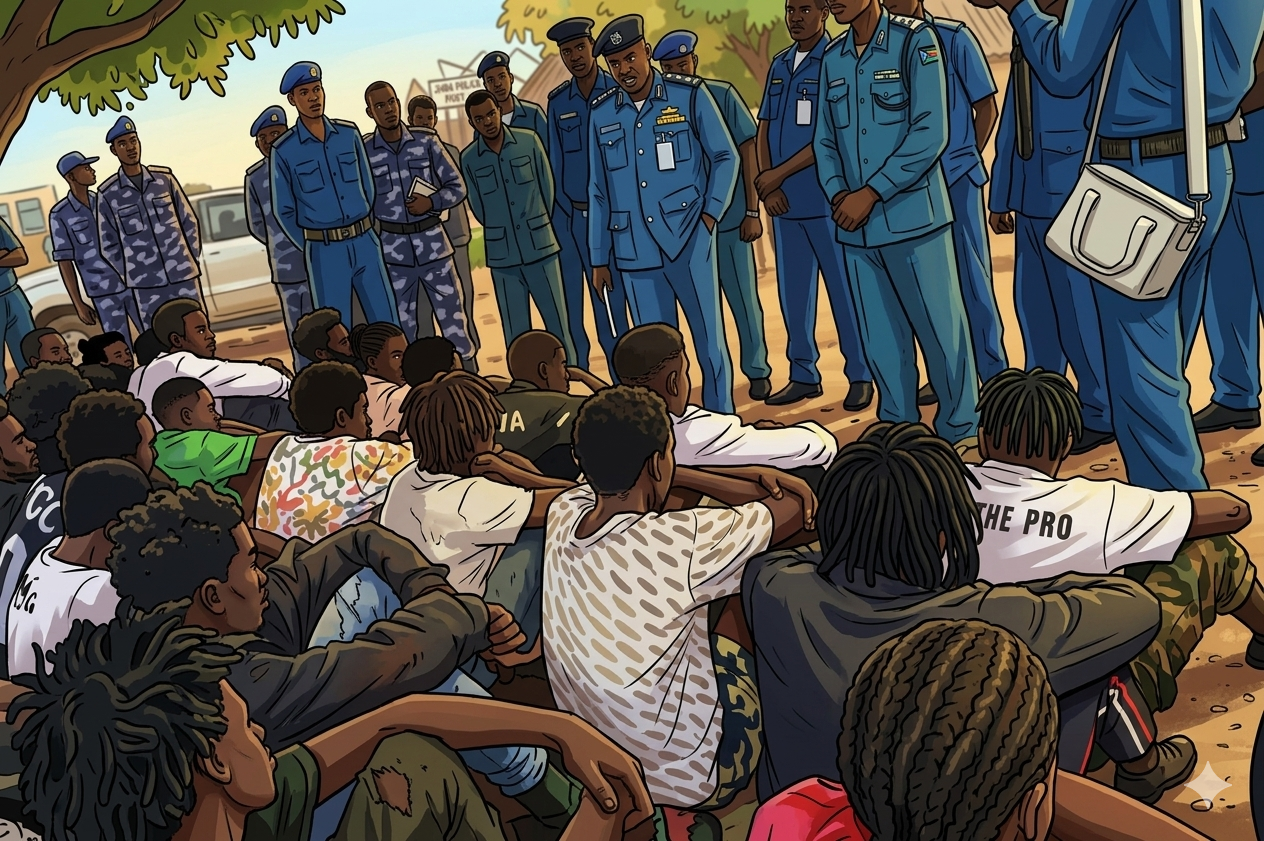
Tackling this requires a “Whole-of-Society” approach—combining immediate law enforcement with long-term community rehabilitation.
Here is a strategic breakdown of how this can be addressed:
1. Strengthened Law Enforcement & Patrols
To address the immediate threat in hotspots like Gudele, Mia Saba, and Shirikat, the police and National Security Services (NSS) can implement:
-
Targeted Night Patrols: Increased presence in known gang territories, particularly during the evening hours when “Toronto” snatchings are most frequent.
-
Boda-Boda Regulation: Since many “Torontos” use motorbikes, enforcing strict registration, plate visibility, and banning the use of tinted visors or hoodies while riding can help identification.
-
Community Policing: Establishing direct communication lines between neighborhood chiefs and local police stations to ensure rapid response when gangs gather.
2. Economic Empowerment & Job Creation
Many youth join gangs due to extreme poverty and lack of a future.
-
Vocational Training: Creating centers in Hi Referendum and Konyokonyo that teach carpentry, mechanics, masonry, and tailoring.
-
Micro-Grants: Providing small-scale funding for youth-led businesses to offer an alternative to the “quick money” of street crime.
-
Public Works Programs: Engaging youth in neighborhood improvement projects (road clearing, drainage) for a daily wage to keep them occupied and productive.
3. Psychosocial Support & De-radicalization
Some gang members are traumatized by conflict or displaced from their families.
-
Rehabilitation Centers: Moving away from just “prison” toward “reform.” Centers should offer counseling to address substance abuse and trauma.
-
Religious & Community Leaders: Leveraging the influence of the Church and tribal elders to mentor at-risk youth and mediate between rival gangs to stop “turf wars.”
4. Educational Integration
-
Back-to-School Initiatives: For younger gang members, the government and NGOs should subsidize school fees to get them off the streets.
-
Extracurricular Engagement: Organizing football tournaments and music/arts festivals in places like Gudele can channel youthful energy into positive competition.
Summary of Actions by Sector
| Stakeholder | Key Action |
| Government | Regulate Boda-Boda operations and increase police visibility. |
| Private Sector | Offer apprenticeships to youth from “high-risk” neighborhoods. |
| Parents/Chieftainship | Monitor youth movements and report gang recruitment early. |
| NGOs | Focus on mental health and vocational skills in Shirikat and Mia Saba. |
Important Note: A purely “iron fist” approach (arrests only) often leads to further radicalization in prison. Lasting peace in Juba’s neighborhoods will likely depend on whether these young people feel they have a stake in South Sudan’s economy.