Report: Agricultural Potential in Lakes State, South Sudan (2026)
Lakes State, situated in the Bahr el Ghazal region, represents one of South Sudan’s most promising yet underutilized agricultural frontiers. Its unique position as a transition zone between the floodplains of the White Nile and the ironstone plateaus provides a diverse ecological foundation for both intensive crop production and large-scale livestock rearing.
1. Agro-Ecological Profile
Lakes State is characterized by a favorable tropical climate and diverse soil profiles that support a variety of agricultural activities.
-
Climate: The region experiences a unimodal rainfall pattern (April–October) with an average annual precipitation of 900 mm to 1,200 mm.
-
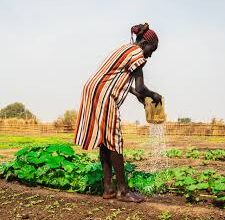
Soil Types: Alluvial Soils: Found along the Nile and its tributaries (Yirol and Rumbek North), these are rich in nutrients and ideal for irrigation and horticulture.
-
Vertisols (Black Cotton Soils): Prevalent in the central plains; high clay content makes them excellent for water retention but difficult to till without mechanization.
-
Ironstone Plateau Soils: Found in the southern parts (Wulu County), these are well-drained and suitable for deep-rooted crops like cassava and tropical fruits.
-
-
Water Resources: The state benefits from proximity to the Sudd wetlands and various seasonal rivers, offering significant potential for small-to-medium scale irrigation during the dry season.
2. Primary Agricultural Commodities
Agriculture in Lakes State is currently dominated by smallholder subsistence farming, but the potential for commercialization is high.
| Category | Primary Crops/Products | Commercial Potential |
| Cereals | Sorghum (main staple), Maize, Millet | High (for regional trade and food security) |
| Oilseeds | Groundnuts, Sesame | Very High (export potential to neighboring states) |
| Root Crops | Cassava, Sweet Potatoes | High (drought-resistant food security crops) |
| Livestock | Cattle, Goats, Sheep | Highest (cultural and economic backbone) |
| Fisheries | Tilapia, Catfish (Lake Yirol, Lake Nyibor) | High (underexploited value chain) |
3. Livestock: The Economic Engine
Lakes State is home to some of the largest cattle populations in South Sudan. For the Dinka communities that inhabit the region, cattle represent wealth, social status, and a mobile bank.
-
Current State: Livestock is managed through traditional migratory (transhumance) systems.
-
Untapped Potential: Transitioning from “prestige-based” rearing to commercial meat and dairy production. The state has the potential to host meat processing plants and dairy cooperatives if veterinary services and cold-chain infrastructure are improved.
4. Key Strategic Opportunities (2026 Focus)
Recent developments in 2025-2026 highlight specific areas for investment and growth:
-
The Shea Butter Project: Greater Bahr el Ghazal, including Lakes State, has vast natural stands of Shea trees. Processing these for the international cosmetic market is a growing interest.
-
Commercial Dura (Sorghum) Schemes: Large-scale mechanized schemes in areas like Aliab have been identified by the Ministry of Agriculture for private sector partnership.
-
Climate-Smart Cooperatives: As seen in neighboring counties, the rise of well-governed farmer cooperatives (Baaicor) is proving that organized groups can significantly increase yields through shared ox-ploughs and improved seed varieties.
5. Critical Challenges & Constraints
Despite its potential, several “bottlenecks” prevent Lakes State from becoming the “breadbasket” of the region:
-
Insecurity: Inter-communal conflict and cattle raiding remain the primary disruptors of farming cycles.
-
Infrastructure: Poor feeder roads make it difficult for farmers in rural counties like Wulu or Cueibet to transport surplus produce to the main markets in Rumbek.
-
Climate Shocks: Increasing frequency of “flash floods” from the Nile and occasional dry spells require a shift toward climate-resilient crop varieties.
-
Post-Harvest Losses: Lack of silos and cold storage leads to significant waste, particularly in the fisheries and horticulture sectors.
6. Conclusion
The agricultural potential of Lakes State is immense, particularly in groundnuts, sorghum, and livestock. To unlock this, the 2026-2030 outlook suggests a shift from humanitarian-led subsistence to market-driven investments, focusing on feeder road rehabilitation and the formalization of livestock trade.